Miro, Bending Spoons and our Catalyst

In my workshops I often joked that my biggest fear is that Miro will be taken over by Microsoft. I’ve seen it before: Visio was a great diagram tool–—then Microsoft acquired it. But it got much worse: last week Bending Spoons announced they would acquire Miro.
Bending Miro
That’s the BS strategy (pun intended): they take over well‑running SaaS companies; they fire all or most of the staff; develop no or just minor new features; raise monthly prices, and charge extra for every extra.
Is that what will happen with Miro? I hope not, but I fear so.
As a Miro Solution Partner, Datentreiber has used Miro intensively as collaboration tool over the past years and we have also collaborated with Miro as a company. We developed human-centric workshop templates for Miroverse and AI-accelerated workflow tools based on Miro AI.
I was invited as a Miro MVP to speak about our Strategy-as-Software approach at Canvas 26, the Miro conference in London. I was Creator of the Month and nominated as Creator of the Year 2025.
So is this especially bad for us?
Yes and no. For us, Miro has always been a TOOL, not THE solution. I still prefer running my workshops with our printed Canvas (as an A0 poster) and sticky notes (preferably Stattys Notes). If that isn’t possible because participants are remote, we typically use Miro, but if the client asked for it we have also used Mural or Concept Boards.
Miro has always been my favorite: the active Miro Heroes community, highly engaged staff, and an incredible range of features gave me hope that Miro would eventually replace Microsoft Office and end the “throw PowerPoint over the fences” mindset in companies.
Eat the BS With a Spoon
Miro’s mission was for people to collaborate across disciplines and borders: visually, in real time, human-to-human, human-to-agent, and agent-to-agent. This is the vision of Collaborative AI.
I still believe in this vision: AI is not a single-user tool; AI should be a multi-user tool.
AI should not to replace people, but bring people together so they can build better businesses together than they could alone or just with AI.
Whether Miro, as part of Bending Spoons, will continue to pursue this vision remains to be seen. What is clear is that at Datentreiber we remain committed to that vision.
Yesterday was the first day back after the summer break and also the official team kick-off of a new project at Datentreiber. We had initiated the project a few days before the Bending Spoon takeover—what timing!
Canvas as Context
In recent months we have experimented a lot with the Catalyst: a Miro sidekick supporting our clients and us as an AI advisor and facilitator in developing data & AI strategies and in implementing data & AI solutions.
We have spoken to many customers and learned that Miro is just one tool and that some prefer other tools. Business managers still want to use PowerPoint, Excel, and Word. Data, AI and software engineers prefer Claude Code or maybe Codex. The product managers favorite Jira, and perhaps the Agile Coach, like me, is a Miro fan.
We do not want to divide. We want to connect: linking interdisciplinary teams and diverse tools, catalyzing the process from strategy to solution and minimizing the efforts, risks, friction, obstacles, and impediments.
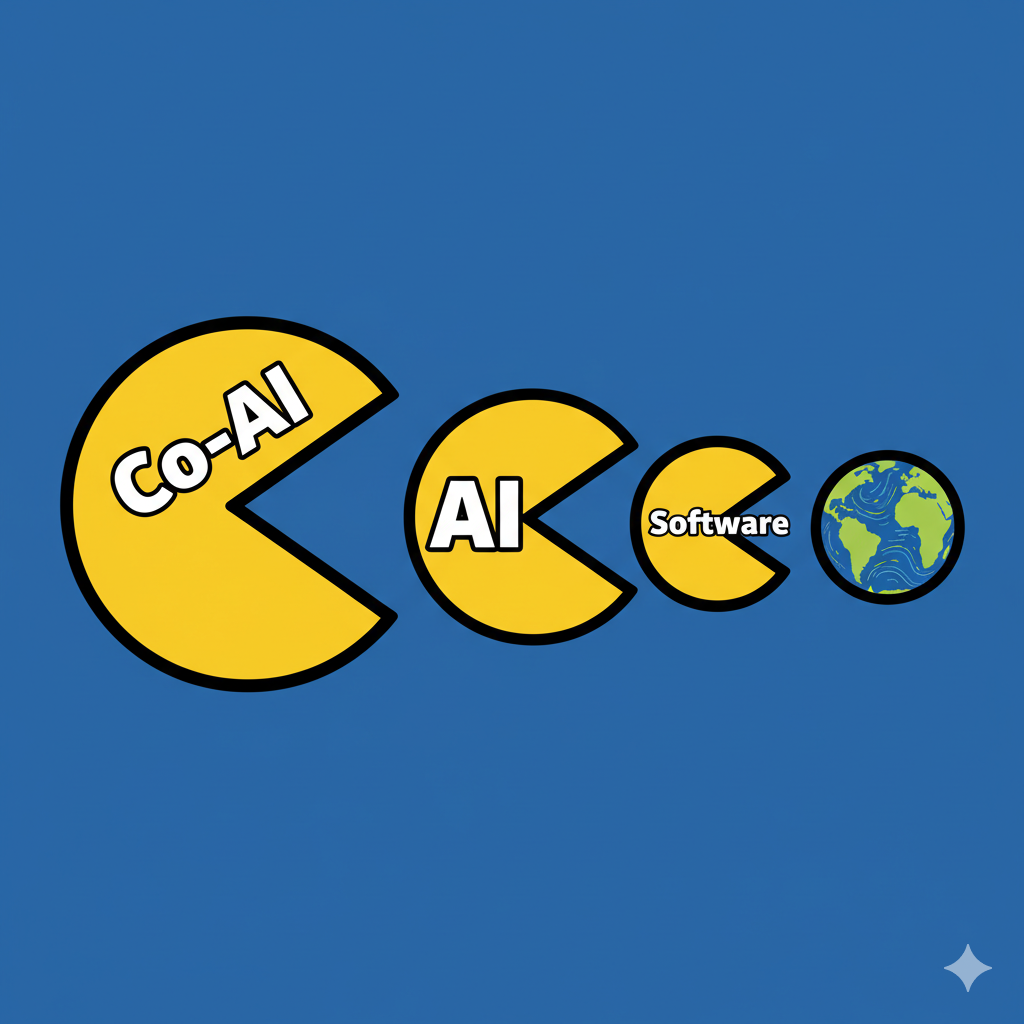
Therefore we decided: the Catalyst should be a standalone solution. As an MCP server, it connects with any tool and supports use‑case ideation, prioritization, and evaluation; data exploration and assessment; user and business requirements analysis, and many other activities as MCP Actions. The Catalyst represents the resulting artefacts as MCP Resources: structured, versioned, documented, and validated.
The Catalyst is the logical evolution of our Canvases. The Canvases provided a visual context that let all stakeholders work towards a common goal. The Catalyst creates a textual context that aligns LLMs and humans with the strategy.
The Catalyst knows our Data & AI Business Design method and …
… turns sticky notes on a canvas into Markdown documents.
… empowers human creativity and transforms it into clarity.
… removes the gap between human workshops and AI workflows.
Community as a Catalyst for the Catalyst
When I developed the Canvases many years ago, I made a decision: I released them under a Creative Commons license as open source—for two reasons:
1) I wanted as many people as possible to use the Canvases to build better businesses.
2) I believe we should give back to the community to enable effective ecosystems.
The internet is built on open source. (Most) Smartphones are built on open source. AI is built on open source.
When I worked in data science, I used almost exclusively open‑source software, and contributed to projects such as the WEKA software.
We intend to continue this path with the Catalyst.
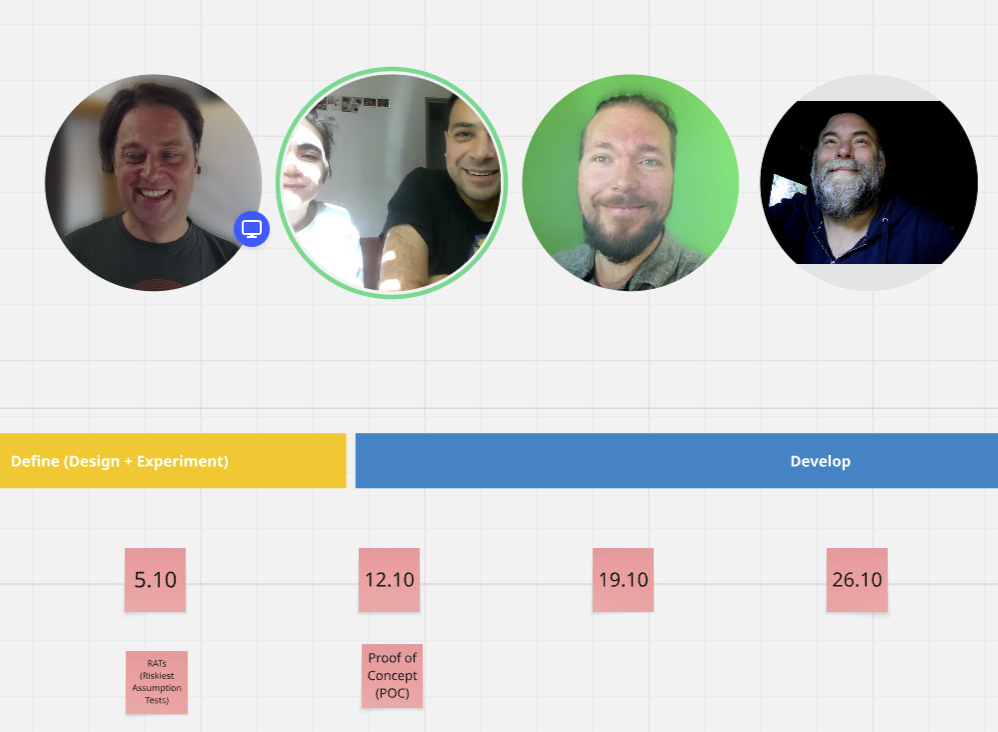
Over the next eight weeks, leading up to the Machine Learning Week Europe, we will develop a first version of the Catalyst and present it at our exhibition booth at the conference.
We are, above all: Romina, Benjamin, Kian and Fabian.
Both the software and the software development process will be open. We “build in public”. We will share progress and setbacks in our Data & AI Business Design Community and on LinkedIn.
To keep things moving we need you as software testers, feedback providers, and, if you wish, code contributors.
I believe great teams create great things. If you’d like to join us, feel free to enter our Catalyst Co-Creation Community:
👉 http://community.datentreiber.com/
May the data be with you.
Martin and the Catalyst team
PS: And yes, of course: we also use Miro for the development of the Catalyst—as a collaboration tool. Why not? Miro boards are great for getting everyone on board and a bent spoon doesn’t make any difference.


Responses