
The Case for Using Small Language Models

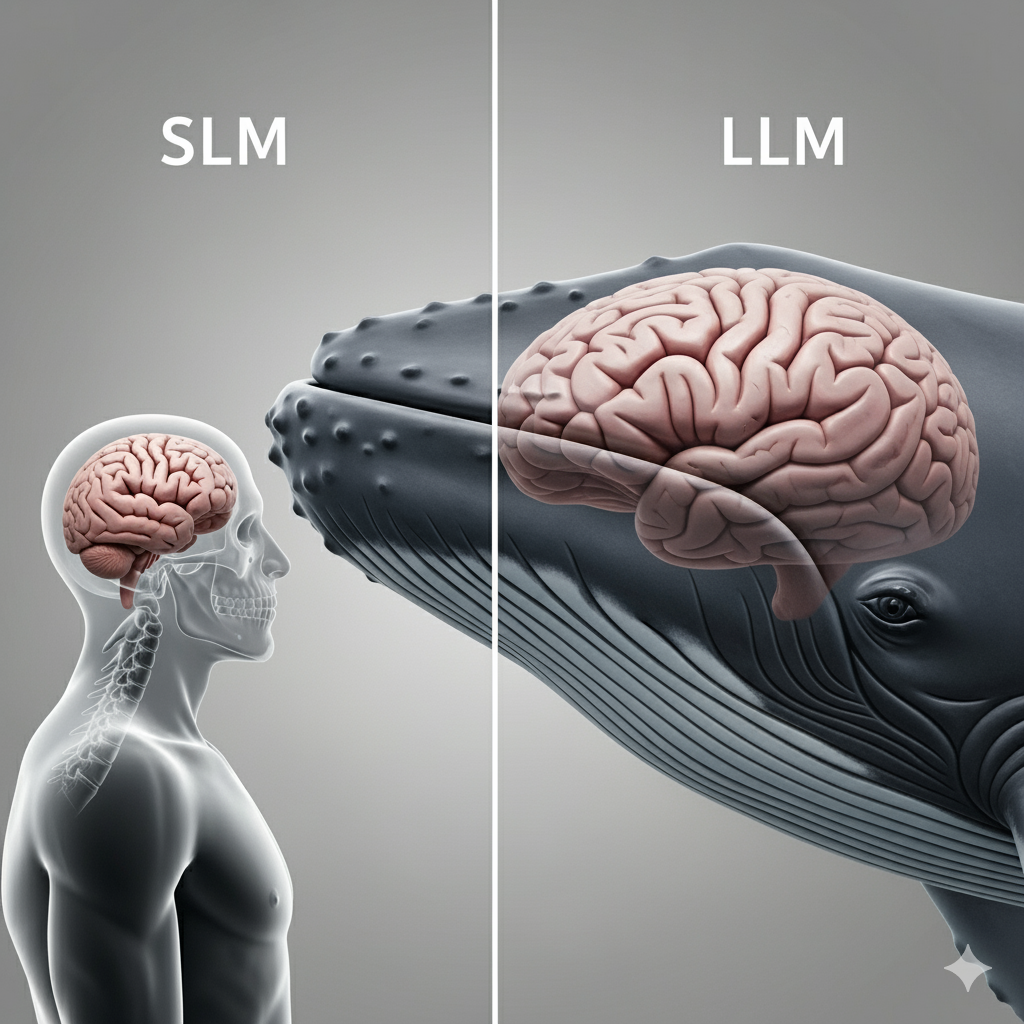
What everyone is talking about today is rarely what everyone will be using tomorrow. So it is with large language models (LLM) such as GPT, Claude or Gemini: “According to a recent study by NVIDIA researchers, small language models (SLMs), rather than their larger counterparts large language models (LLMs), could become the true backbone of the next generation of intelligent enterprises.”
Bigger is not always better. SLM has several advantages over LLM:
- “SLMs are lightweight enough and can be deployed locally on edge devices or local servers.”
- “SLMs can deliver real-time decision-making at the point of need.”
- “SLMs are significantly more energy-efficient and cost-effective.”
- “SLMs [..] can be fine-tuned for specific tasks or industries.”
- “SLMs are often more reliable for domain-specific agentic tasks and are less likely prone to hallucinate or give off-topic answers.”
- “SLMs can provide a higher level of control and trust.”
These characteristics make SLM particularly relevant for growth industries:
“This capability is especially very important in industries like defense, finance, healthcare, and transportation, where safety, ethics, and regulatory compliance are major concerns. In these sectors, explainability is non-negotiable, transparency is a strategic asset, and SLMs can play a key role in building customer trust and ensuring adherence to data protection regulations like GDPR.”
Read more about SLMs:
👉 https://hbr.org/2025/09/the-case-for-using-small-language-models
What are your project experiences with SLM? Please let us know in the comments. 👇




Responses