Training VS Workshop

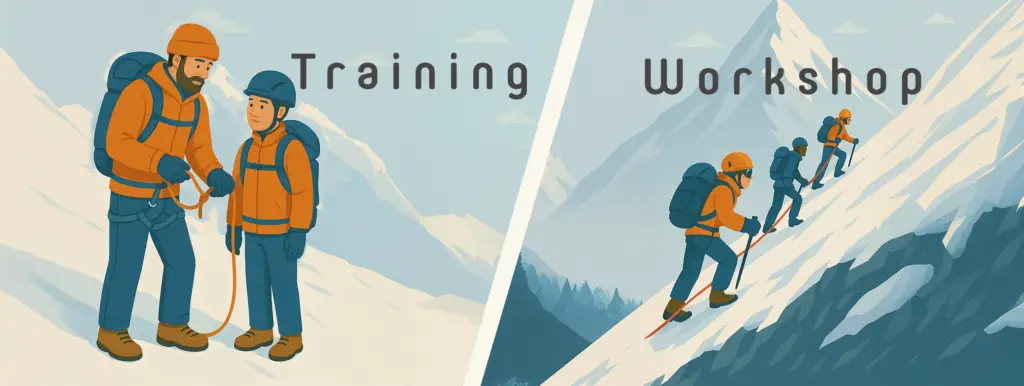
A few years ago, I had an experience in the mountains that illustrates the difference between training and workshop. We met a group of hikers who were on their way to climb Germany’s highest mountain, Zugspitze, which involves crossing a glacier and walking along a ridge.
Impressed, I asked, “Have you done this many times before?”
One of the participants replied, “No, this is my first time in the mountains.”
My jaw dropped.
Having lived at the foot of Zugspitze in Grainau for many years, I had seen the helicopter fly many times to rescue people like this from the mountain.
In business, there is no mountain rescue. Those who get lost, run out of strength or are not technically prepared fall by the wayside or even crash.
That’s why our motto at Datentreiber is:
train. think. transform.
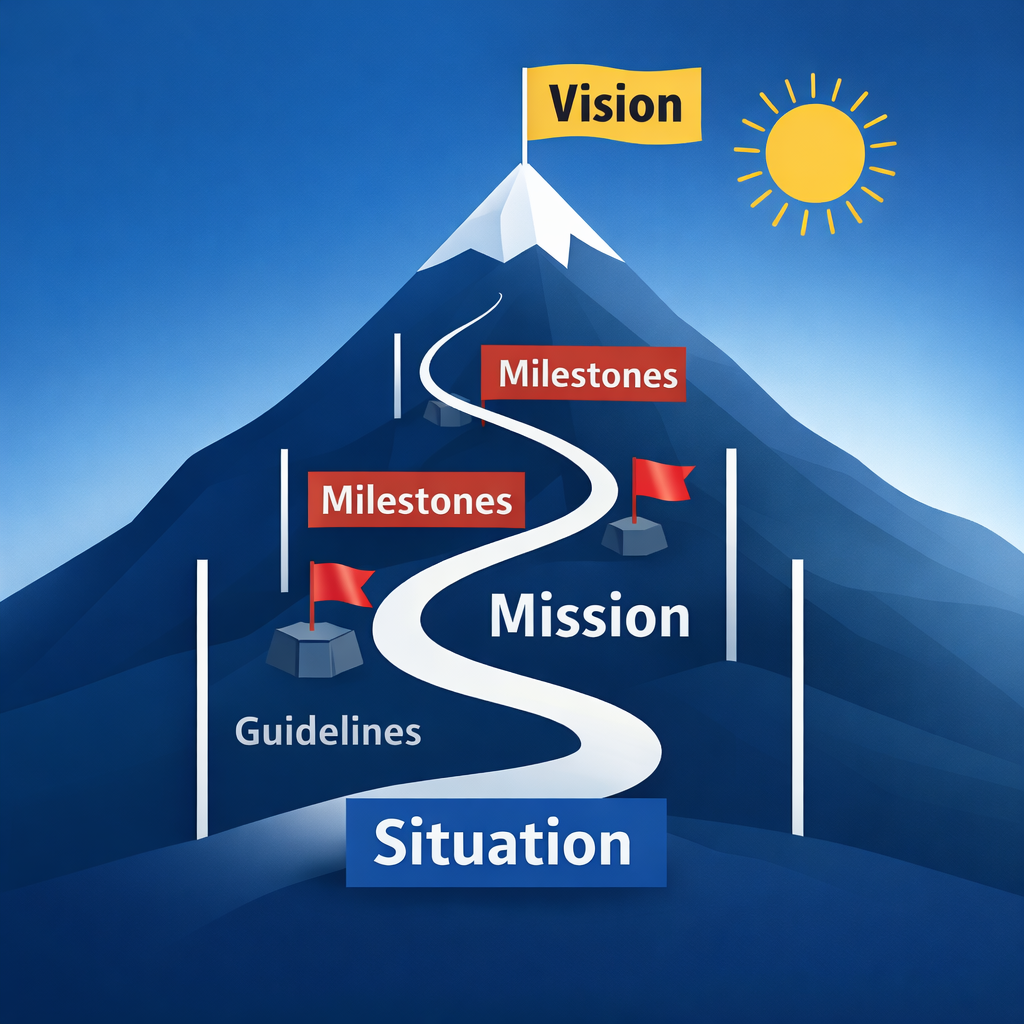
First, learn and practise; then think about where you want to go, where you stand, which path to take and what skills and tools you need to get there. Once you have done that, you’re ready to go.
This is why we clearly distinguish between training and workshops in our offerings. We don’t call our training sessions ‘workshops’ just because it sounds better; it’s because that’s exactly what they are: an opportunity to try out new things in a safe environment, free from the risk of making mistakes and the pressure to get things right straight away.
Our training courses are not masterclasses either. I am not a master, and this is not a class. I am a trainer. I explain the basics and do exercises with the participants. The important thing is that the participants do it themselves.
It’s no different in sports: you don’t learn to ski with PowerPoint presentations, but on the slopes.
You don’t need a ski master but a ski trainer. For example, Felix Neureuther is a ski master (i.e., Olympic gold medalist), but he is not a ski trainer. Funny story: he was therefore prohibited from training his children’s classmates on a skiing day.
And before you hit the racetrack, a lot of training is on the agenda.
Some companies used to think differently: they wanted on-the-job training. In other words, they wanted employees to start working right away and learn as they went along.
Anyone who participates in competitive sports knows that this approach doesn’t work. Learning is an achievement in itself. Demanding both learning and delivering is overwhelming. As a result, neither is achieved properly.
At Datentreiber, we learned this through experience: when participants first took part in our trainings and then attended our workshops, the workshops were two to four times more effective. In other words, we made much more progress in the same amount of time.
Why? Because all the participants had the same level of knowledge and methodological skills. There were fewer questions and discussions. Everyone knew why, when and how we were doing what. We were a well-trained team on the AI journey. We were a well-coordinated roped party climbing the data mountain.
This enabled us to work together efficiently and effectively. After all, that’s what a workshop is all about: working together to achieve something using the techniques and tools we have trained with.
Train & Work
Learn & Earn
Explore & Exploit
First one, then the other.

Responses