

Co-Intelligence: Living and Working with AI

By now, everyone has probably seen the saying “AI Won’t Replace You. A Human Using AI Will.” on LinkedIn and other social media platforms. As much as it captures the current zeitgeist, I believe this statement is fundamentally wrong.
Firstly, there are definitely people who are being replaced by AI or robots, even if they try to fight against it, using AI.
Secondly, the saying narrows the perspective to individuals: neither does your work as an individual make a decisive difference, nor is it your sole responsibility to deliver better and faster work results with AI.
Business success is teamwork. Successful products and services are the result of complex business processes involving many people and often even many different teams, departments, divisions, or even companies. And yes, IT and AI systems are also involved. Modern companies are socio-technical systems. They are not a bunch of lone warriors armed with better (AI) tools.
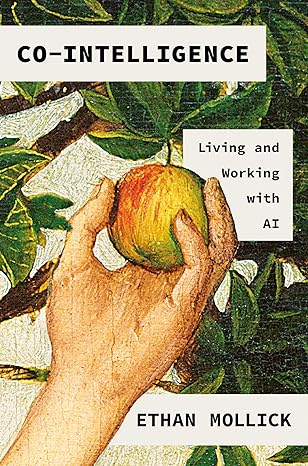
This is where my criticism of Ethan Mollick’s currently very popular and highly acclaimed book Co-Intelligence comes in: “Co-intelligence” stands for the collaborative intelligence of artificial and human intelligence. Instead of “AI” in the sense of “artificial intelligence”, the author advocates “augmented intelligence”: using AI where we humans are inferior.
While reading or listening to the audiobook, I often nodded in agreement: Ethan is absolutely right about everything he writes. And that’s why I would recommend the book to everyone. But every time I nodded, I immediately thought: what next?
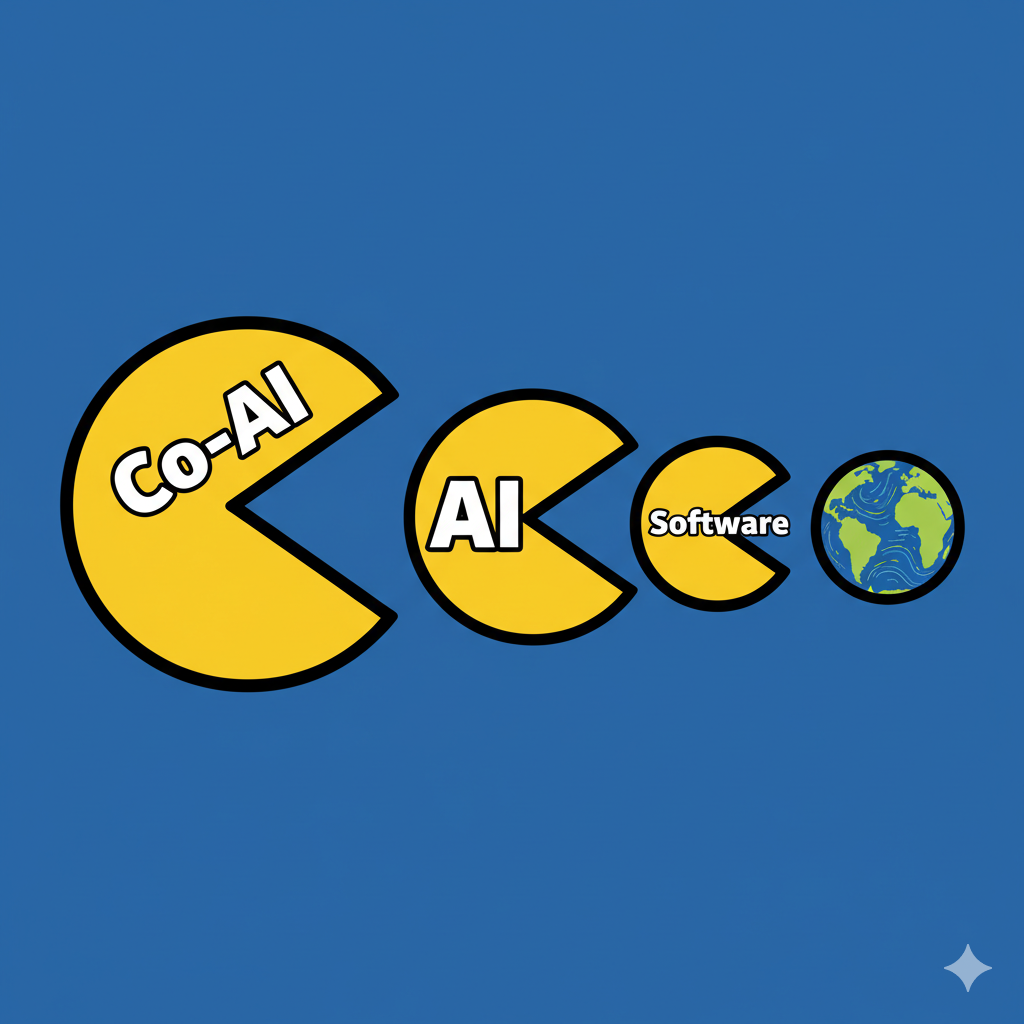
I find his understanding of co-intelligence too narrow. My understanding of collaborative intelligence is: artificial intelligence plus team intelligence. Co-intelligences combine artificial agents and human agents into a system that is more than the sum of its parts.
I would have liked to see more answers to the question of how we can create natural-artificial-intelligent systems that are not simply more efficient than our previous digital-analog systems by exploiting synergies, but are fundamentally more effective because they explore the emergence, i.e., something completely new.
This is the big question and the immense challenge facing our economy and society: what does the coexistence of AI and HI look like in the (near) future? Companies must answer this question. Because:
“AI won’t replace you. A company using AI will.“



Responses