

Thinking in Systems

Systems Thinking is the new Design Thinking. Design thinking is being talked to death because sticking colorful notes does not lead to disruptive innovations. Surprise, surprise! I will come back to design thinking in a moment.
So we need a new way of thinking and a new wave of thinkers: the System Thinker analyses, optimizes, models, simulates and much more the whole system – not its individual parts.
As a bioinformatician, I have learned to think in terms of biological systems (called Systems Biology): for example, it is not the individual genes that are decisive, but their interaction, the network. For example, the worm C. elegans, a popular model organism in Systems Biology, has about the same number of genes as humans. It is therefore not the number of genes that determines intelligence or complexity, but how the genes form a system.
Back to business: companies are also systems and if you want to improve them with data and AI, you have to understand and optimize the system, not the individual people, process steps, etc.
This is currently exemplified by the development from generative to agentic AI: the mere automation of individual steps such as generating text for a social media post has not brought the hoped-for increases in productivity, as the human user remains a bottleneck.
Agentic AI is associated with the hope of automating and optimizing the entire chain of actions and decisions. However, the system or at least the process must first be understood and then the process must often be rethought. Because:
“If you digitize a shitty process, then you’ll end up with a shitty digital process.”
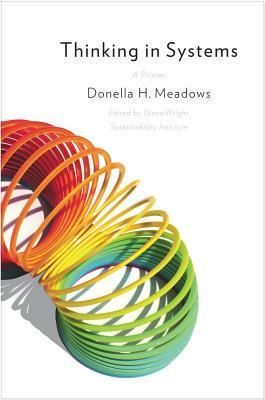
That’s where Systems Thinking comes into play and the book “Thinking in Systems” is a good place to start. For a deeper introduction and as a practical guide, unfortunately less so. It’s more about the basic principles of systems, as the popular example of feedback loops, and many anecdotes. There is too little available for the practical implementation of systems.
Speaking of systems: we are always dealing with socio-technical systems. In other words, people interact with (physical or virtual) machines. And usually, many people are involved. So it’s also about organization. That’s why we at Datentreiber talk about TOP structures: Technology, Organization, and People.
We shouldn’t forget is that people play a crucial role in all business systems: as customers, as managers, as decision-makers, as (AI co-)workers. Understanding and improving this system also requires design thinking, namely the ability to design systems from a human perspective.
Incidentally, our Data & AI Business Design method is inspired by Design Thinking as well as Data Thinking and System Thinking. That’s why we always go through the levels of business, user, data and AI in our workshops and sprints.
Conclusion: don’t let hypes, trends etc. narrow your thinking down to one term – be it design, data, systems, AI, … – Our human brains are designed for diversity. That is our strength.

Responses